

Thank you!
Thank you for submitting the form. The Kalpataru team will get in touch with you.
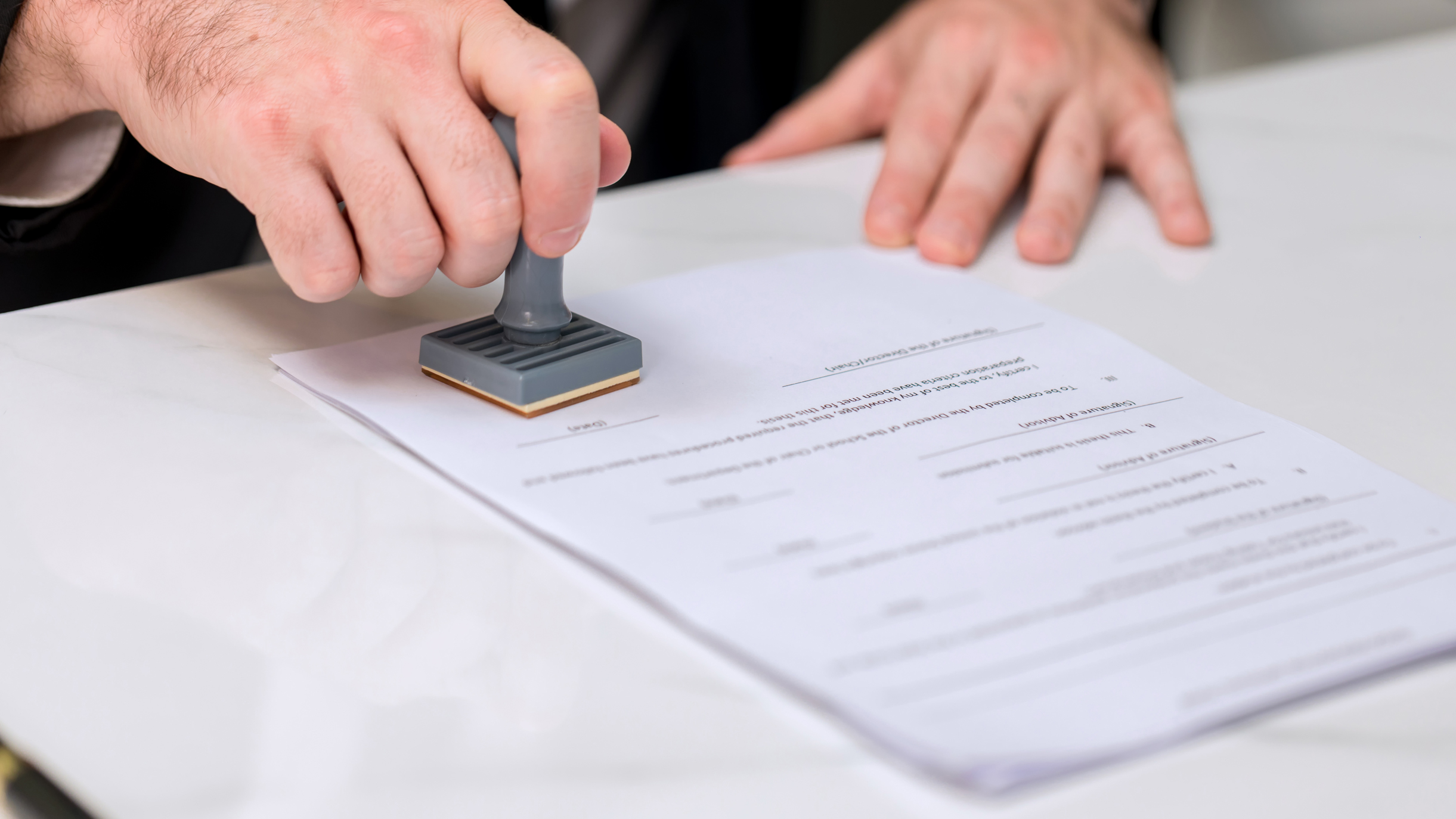
What Is an Encumbrance Certificate & Why Buyers Need One
You’ve paid the token amount. You’ve fallen for the flat. You’re ready to sign. But here’s a question most buyers never ask: is there already a bank loan or a court case sitting quietly on this property? This is exactly the blind spot an encumbrance certificate is built to catch. Let’s walk through what it is, plainly, so you can verify any property before you commit your money.
What Is an Encumbrance Certificate (EC)?
An encumbrance certificate (EC) is an official document that records every registered transaction made on a property over a chosen period. In simple terms, it tells you whether a property is free from financial or legal liabilities such as loans, mortgages, liens, dues, or legal disputes.
Here’s a simple example. Suppose the flat you like was mortgaged by its owner five years ago to raise a loan. Until that loan is cleared and the record updated, the bank has a claim on the property. An EC is how you find that out before you pay, rather than after.
So what does the word “encumbrance” actually mean? It simply means a charge or claim on a property created by someone other than the owner. If a house is mortgaged, the lender adds a “lien” to it, which stops the owner from selling until the loan is repaid. In Hindi, the certificate is often called bhar-mukt praman, meaning proof of a burden-free property. This is also the answer if you’ve ever wondered what is EC for property.
Why does this document carry so much weight? It rests on a legal foundation. Under Section 17 of the Registration Act, 1908, certain property transactions must be registered to be legally binding, and the EC is the official record of those registrations. That’s why an EC for property is treated as the starting point of any serious title check by buyers, lawyers, and banks alike.
What Is the Purpose of an Encumbrance Certificate?
The purpose of encumbrance certificate checks is to protect your money by proving whether a property has a clean, marketable title before you commit. Its uses, though, go well beyond a single sale.
Here are the main reasons you’ll need one:
- Applying for a home loan: Most banks will not sanction a home loan or loan against property without a clear EC, since it confirms there are no prior registered claims.
- Property mutation: You’ll need it to update ownership in municipal records, including khata registration and khata transfer.
- Updating tax records: Local bodies may ask for an EC to update property tax records, especially where dues are pending.
- PF withdrawals: When withdrawing from your EPF to buy a home, you must declare that the property is free from encumbrances. EPFO has waived the need to attach an EC, but an EC is how you satisfy yourself that the declaration is true, and officials may still ask for supporting title documents.
- Protection from fraud: An EC helps you verify a property’s registered transaction history and supports ownership verification, reducing the risk of double-selling and disputed sales. Ownership itself is established by the sale deed and title documents, which the EC complements rather than replaces.
The EC is a government-backed record of a property’s financial and legal history. For a modest fee, it can save you from a purchase that unravels months later.
Form 15 vs Form 16: Understanding Your EC Result
In Karnataka, Tamil Nadu, Kerala and several other states, your EC is issued in one of two formats depending on what the search finds. Maharashtra and some other states use different nomenclature, so check what your state's registration department issues.
| Parameter | Form 15 (EC with encumbrances) | Form 16 (Nil EC) |
|---|---|---|
| What it shows | Registered transactions found during the search period | No registered encumbrances during the period |
| Details included | Ownership, parties, registration and deed details | Confirms a clear record, no transactions listed |
| Mortgages and releases | Shows a mortgage and its later release if both fall within the period | Not applicable |
| What it means for you | Read carefully; charges may still exist | Clear title for the period; the preferred outcome |
Form 15 lists what the search actually found: every sale, mortgage, gift, or court order registered on the property during the period you requested, along with the parties and dates. If a loan was taken and later repaid, you'll see both the mortgage and its release deed, provided both were registered within that window. Form 16, known as a Nil EC, confirms that no registered transactions were found for the requested period. For a buyer, a Nil EC is the reassuring result.
One quick clarification: this Form 16 has nothing to do with the income tax Form 16 your employer issues. They share a number and nothing else.
What Information an EC Contains
Once you have the certificate, you’ll want to know how to read it. A typical EC lists the following for each transaction:
- Property description: the address, survey and plot number, extent (area), and boundaries.
- Date of registration of each transaction at the Sub-Registrar’s Office (SRO).
- Nature of the deed: whether it was a sale, mortgage, mortgage release, rectification, partition, or gift deed.
- Guideline value (also called the circle rate), the government’s assessed value of the property.
- Consideration value, the actual value recorded in the registered document.
- Parties involved in each transaction.
Reading these entries in order shows you how many times the property has changed hands and whether any charge was ever placed on it.
How to Get an Encumbrance Certificate Offline
Once you know how to read one, here’s how to get one. Wondering how to get an encumbrance certificate the traditional way? If your state doesn’t offer an online facility, or you simply prefer applying in person, follow these steps at the Sub-Registrar’s Office. This is also the answer to encumbrance certificate how to apply offline.
- Visit the correct SRO. Go to the Sub-Registrar’s Office whose jurisdiction covers the property’s location.
- Collect the application form. Obtain the EC application form from the office counter. In Maharashtra, this is commonly the Form 22 application, though the exact form can vary by state.
- Fill in the details and attach documents. You’ll typically need ID proof, address proof, the property registration document, and a non-judicial stamp paper.
- Pay the fee. The charge depends on the number of years you want searched.
- Collect the certificate. After the office processes and verifies the records, you can collect your EC.
That five-step route is all there is to how to get an encumbrance certificate approval directly from the registrar.
Also Read: UDS in Real Estate: Meaning, Calculation and Why It Matters
How to Get EC Online
Many states have digitised the process, which makes it faster and lets you track your application in real time. Since every state runs its own registration portal and process, always begin from your state’s official registration or land records website, rather than assuming every portal works the same way. Here’s how to get EC online in most states.
- Go to your state’s land records or property registration portal.
- Register as a new user, then log in.
- Open the “Services” tab and select “Online EC”.
- Choose the duration for which you need the certificate.
- Enter the property details and upload the required documents.
- Submit the form and pay the application fee.
States including Karnataka, Kerala, Uttar Pradesh (IGRSUP), Tamil Nadu (TNREGINET), Telangana (Dharani), and Andhra Pradesh offer online EC services. In Maharashtra, you can use the IGR Maharashtra portal (igrmaharashtra.gov.in) through its Online Services section, where a digitally signed EC carries a QR code. One caveat worth knowing: in some cases the final, legally valid EC in Maharashtra may still require a physical submission at the SRO, so always confirm the current process on the official state portal.
How to Download EC Online
Knowing how to download EC online saves you a trip to the registrar. Once your application is processed, downloading an encumbrance certificate is simple
- Log in to your state’s registration portal.
- Find the "View / Download Encumbrance Certificate" option on your dashboard.
- Enter the relevant details, such as the survey number and document number.
- Pay any required fee, then view and download the certified copy.
To check progress before it's ready, use the "Track Application" or "Application Status" option and enter your acknowledgement number. Once approved, learning how to download encumbrance certificate copies for your records takes only a minute.
EC Fees, Timeline and Validity
Costs are modest. In Maharashtra, the fee for an EC applied online typically ranges from around ranges from around ₹150 for up to 10 years to ₹300 for up to 30 years, with offline applications costing roughly ₹50 to ₹100 more. Urgent or tatkal processing can cost more. The fee scales with the number of years you request. As a rough guide, a 13-year search might cost around ₹200, whereas a shorter 5-year search may cost only ₹50 to ₹100.
Here’s a practical tip: align the EC period with your lender’s requirement so you don’t pay twice. Banks typically ask for a 13-year or 30-year EC before sanctioning a home loan or loan against property, though the exact requirement varies by lender. Requesting a longer span than you need adds cost. Requesting less than the bank wants means applying all over again.
On timing, an offline EC usually takes around 15 to 30 days from the date of application, while the online route is generally quicker. As for validity, an EC is valid only for the specific period printed on it. If you applied for records up to last year, it won’t reflect anything registered since. So near the time of your transaction, it’s wise to pull a fresh EC covering the most recent months.
What an Encumbrance Certificate Won’t Tell You
This is the part most guides skip, and it matters more than people expect. An EC is powerful, but it has a defined boundary: it only covers registered documents recorded at the Sub-Registrar’s Office. Anything that was never registered simply won’t appear.
That leaves real gaps a careful buyer must close separately:
- Unregistered interests: certain equitable mortgages or unregistered lease agreements may not show up.
- Municipal tax arrears: unpaid property tax often won’t appear on the EC. Ask for a no-dues certificate from the local body.
- Utility and society dues: pending water bills or unpaid society maintenance charges are not captured.
- Verbal assurances: never rely on a seller saying “the loan is repaid”. An encumbrance stays on record until a cancellation or release deed is registered and a fresh EC shows a Nil result.
And note the difference between two documents buyers often confuse. A sale deed proves ownership and transfers title. An EC shows the transaction and liability history. They’re complementary, not interchangeable, and you’ll want both.
To understand what this companion document actually covers, here's a complete guide to what a sale deed is and its process.
How Buying a RERA-Registered Home Reduces Title Risk
Much of the worry around encumbrances comes from resale and unregulated deals, where a property’s history can be murky. Buying a home in a RERA-registered project changes that picture. Under RERA, promoters are required to disclose encumbrances on a project, which brings a layer of transparency that private resales often lack.
This is where an established developer’s track record helps. Kalpataru, with over 56 years of legacy and 125 delivered projects, develops RERA-registered homes with clear documentation, so you’re not left untangling a decades-old title on your own. A well-planned project such as Kalpataru Parkcity in Thane gives buyers a transparent starting point, though a personal EC and title check remain worthwhile.
An encumbrance certificate is among the cheapest safeguards a property buyer has, revealing hidden loans, mortgages, or disputes for just a few hundred rupees. Request the right search period, and pair it with the checks the EC leaves out. An EC can't promise a perfect property, but skipping it means buying with risk you could easily have seen. For title verification specific to your purchase, speak with a qualified lawyer, and explore Kalpataru's RERA-registered homes across Mumbai, Thane, and Pune to begin your search with confidence.
Before you finalise a project, it's worth knowing how to check RERA registered projects to confirm this disclosure yourself.
Frequently Asked Questions
What is an encumbrance certificate for property?
An encumbrance certificate for property is an official record from the Sub-Registrar’s Office of all registered transactions on a property. It confirms whether the property is free from loans, mortgages, or disputes before you buy.
What is the purpose of an encumbrance certificate?
Its main purpose is to prove a property has a clean, marketable title. You’ll also need it for home loans, property mutation, tax-record updates, and PF withdrawals, and it guards against fraud.
What is a Nil encumbrance certificate?
A Nil EC confirms that no registered transactions exist for the requested period, and is issued as Form 16 in states such as Karnataka, Tamil Nadu and Kerala. It signals a clear record and is the outcome most buyers hope to see.
How long is an encumbrance certificate valid?
An EC covers only the period printed on it and nothing registered after that date. Pull a fresh EC covering recent months close to your transaction, especially for a home loan.
How many days does it take to get an encumbrance certificate?
Offline applications typically take 15 to 30 days. Applying online is usually faster with real-time tracking, though timelines vary by state and search period.
How do I apply for an encumbrance certificate online?
Encumbrance certificate how to apply is simple: visit your state’s registration portal, select the Online EC service, enter the property and period details, upload documents, and pay the fee. Most major states support this.
Can I get an encumbrance certificate for fewer than 30 years?
Yes. You can specify any period, such as 5, 10, or 13 years. Since the fee scales with the span, request only what your lender or purpose actually requires.
What is the difference between an EC and a title deed?
A title deed proves ownership and transfers title. An EC shows the property’s registered transaction and liability history. They serve different purposes, so verify both before buying.
Does an EC show all liabilities on a property?
No. An EC reflects only registered transactions. It won’t capture unregistered interests, tax arrears, water bills, or society dues. Pair it with a no-dues certificate and legal verification.
For specific legal and financial advice regarding property transactions, we recommend consulting with qualified professionals such as lawyers, chartered accountants, or financial advisors.


