Thank you!
Thank you for submitting the form. The Kalpataru team will get in touch with you.
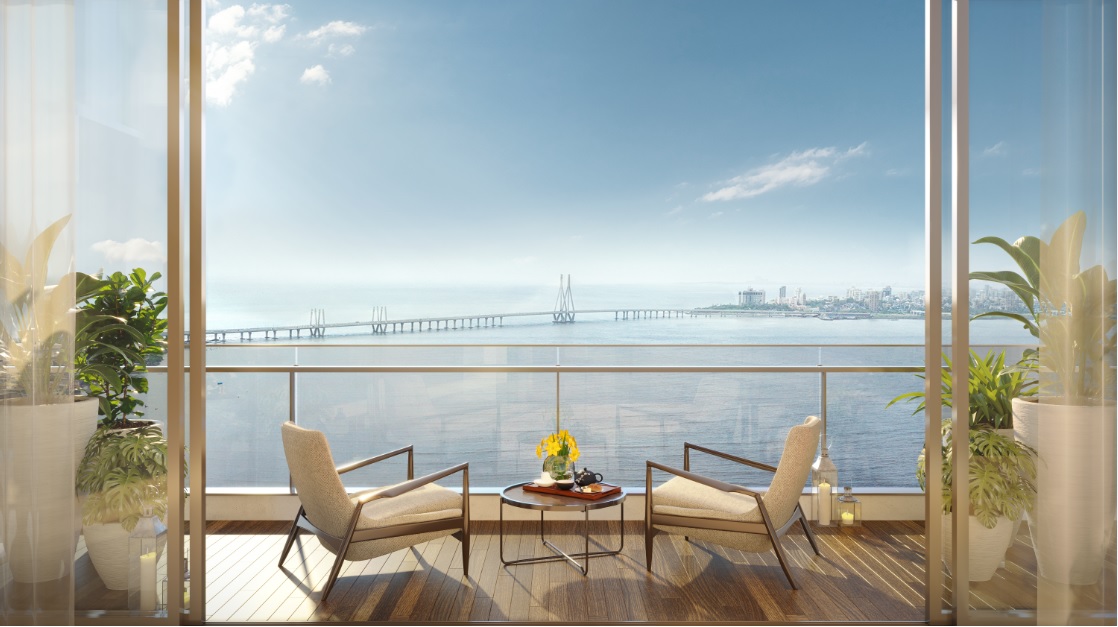
Luxury Real Estate Trends in Mumbai: What Is Driving Demand for Premium Homes?
Mumbai’s luxury residential market is undergoing a significant transformation. While price, address and home size continue to define the traditional understanding of luxury, affluent homebuyers are increasingly looking beyond these conventional markers. Today, luxury is evolving into a broader lifestyle proposition, one that combines privacy, larger and better-designed residences, wellness, curated amenities, views, convenience, connectivity and a strong sense of exclusivity. Mumbai, as India’s leading premium residential market, provides a particularly strong illustration of this transition. It held 32.55% of India’s luxury residential market in 2025 (Mordor Intelligence), the clearest place to read luxury real estate trends.
Mumbai’s Luxury Housing Market Is Scaling Up
The growth of Mumbai’s luxury housing market is visible not only in transaction values but also in the number of homes being transacted.

(Source: India Sotheby's International Realty and CRE Matrix _ Mumbai Luxury Housing Report H1 CY’26)
According to the report by India Sotheby’s International Realty and CRE Matrix, during H1 CY2026, Mumbai recorded 957 luxury home transactions across the primary and secondary markets, compared with 761 units in H1 CY2025. The transaction volumes have increased by 71% since H1 CY2023, while annual luxury home sales have nearly doubled over the past five years.
Homes priced at ₹10 crore and above generated ₹18,512 crore in H1 CY2026, up 12% year on year and the highest half-yearly figure on record.
The momentum becomes even more apparent when viewed over a longer period. Mumbai recorded 1,699 luxury home transactions during the trailing 12-month period, the highest one-year transaction volume reported in the source.
Pricing is where the luxury real estate market trends turn interesting. Average rates rose from ₹54,661 per sq. ft. in CY2021 to ₹75,006 in CY2025, then eased around 4% to ₹72,270 in H1 CY2026, which the report reads as consolidation.
Importantly, the demand is not simply for expensive homes. Buyers are increasingly seeking residences with superior specifications, larger layouts and enhanced lifestyle amenities. This indicates a fundamental change in what affluent buyers perceive as value.
Real estate investments are subject to market risks. Past performance is not indicative of future returns. Please consult a financial advisor before making investment decisions.
Luxury Is Becoming a Lifestyle Purchase
Historically, luxury housing in Mumbai was strongly associated with three attributes:
- A prestigious location
- A high ticket size
- A large residence
These remain important. However, the emerging luxury consumer is increasingly evaluating the experience delivered by the development, rather than the apartment alone.
The research identifies several factors contributing to this evolution:
- Larger and better-designed homes
- Privacy and exclusivity
- Wellness infrastructure
- Curated amenities
- Green and open spaces
- Connectivity and convenience
- Branded or professionally managed experiences
- Long-term asset value and developer trust
Homes of 2,000 to 4,000 sq. ft. took 58% of primary luxury sales in H1 CY2026. Of the luxury home market trends worth tracking, this is the clearest: luxury is shifting from ownership of a premium product to ownership of a premium lifestyle.
What Is Driving Mumbai’s Luxury Housing Demand?
1. Rising Wealth and the Expansion of the HNI/UHNI Buyer Base
India’s expanding pool of high-net-worth and ultra-high-net-worth individuals is creating a larger addressable market for luxury housing.
India’s luxury housing market is also being shaped by a growing pool of affluent buyers. According to Mordor Intelligence’s “The India Luxury Residential Real Estate Market” report, the country has approximately 13,600 ultra-high-net-worth individuals (UHNWIs), with real estate accounting for nearly 32% of their portfolios. Importantly, luxury demand is no longer driven only by traditional family wealth. A new generation of younger wealth creators is emerging as an increasingly important segment of the premium housing market, bringing with them evolving expectations around lifestyle, location, design and amenities.
Buyers aged 35 to 55 made 58% of Mumbai’s luxury purchases in H1 CY2026. It is one of the quieter trends in the real estate industry: the luxury buyer is now most likely to be mid-career.
Consequently, luxury housing is no longer exclusively associated with inherited wealth. The expanding wealth base is bringing new expectations into the market.
2. Connectivity Is Reshaping the Geography of Luxury
Mumbai’s infrastructure transformation is also influencing premium residential demand.
Metro expansion, road infrastructure and improving connectivity can influence land values and residential development potential. The source research notes that major transport infrastructure can reprice adjoining land even before completion, while locations benefiting from connectivity improvements can become increasingly attractive to premium developers and buyers.
Metro Line 3, the Aqua Line, has run from Cuffe Parade to Aarey since October 2025, with a station at BKC, the Bandra Kurla Complex. The Coastal Road has cut travel times most sharply for Worli, Prabhadevi and Dadar.
For luxury buyers, connectivity is not simply about travelling from one location to another. It increasingly represents time efficiency.
Access to business districts, airports, metro networks, retail destinations, premium dining, entertainment and social infrastructure can become an important part of the overall residential proposition.
This helps explain why luxury demand is expanding across multiple Mumbai micro-markets rather than remaining concentrated only in traditional South Mumbai locations.
3. The NRI Buyer Continues to Matter
NRIs represent another important demand channel for Indian luxury residential real estate. For overseas buyers, premium Indian residences can combine several objectives:
- A lifestyle asset
- A family residence
- A second home
- A long-term investment
- A trophy asset
Anarock has put the NRI share of Indian real estate investment at around 20%, up from 10% to 15% in earlier years. That interest skews premium rather than mid-market, which makes the cohort especially relevant here.
NRI property investments are subject to FEMA regulations and RBI guidelines. Please consult a legal expert familiar with NRI property laws for personalised advice.
Also Read: FEMA Regulations for NRIs Investing in Indian Real Estate
The New Definition of Luxury: Privacy, Wellness and Experience
Privacy Is Becoming a Premium Commodity
As Mumbai becomes increasingly dense, privacy itself is becoming a form of luxury.
Affluent buyers are increasingly seeking:
- Lower-density developments
- Fewer residences per floor
- Greater separation between homes
- Controlled access
- Private arrival experiences
- Larger personal spaces
This is particularly relevant in premium high-rise developments, where the scarcity of land makes physical space increasingly valuable. Residences above 4,000 sq. ft. were 11% of primary units sold in H1 CY2026 but delivered over 25% of value.
Luxury therefore is not simply about having more square feet. It is about how exclusive those square feet feel, which is why the most sought-after apartments in Mumbai are judged as much by surroundings as by floor area.
Wellness Is Moving from Amenity to Expectation
Another important change is the growing role of wellness. The research identifies wellness infrastructure as an increasingly important component of luxury housing, extending beyond conventional swimming pools and gyms to include spaces and features associated with physical and mental wellbeing.
The emerging luxury proposition can include:
- Yoga and meditation spaces
- Landscaped environments
- Fitness facilities
- Wellness-oriented community spaces
- Improved natural light and ventilation
- Air and environmental quality
- Spaces designed for relaxation and mental wellbeing
This suggests that wellness is moving from being an add-on amenity to becoming part of the fundamental residential proposition.
Green Spaces Are Becoming Part of Premium Value
The relationship between luxury and nature is also becoming stronger. Affluent buyers increasingly value landscaped environments, open spaces and sustainable features. The research identifies energy efficiency, rainwater harvesting, smart automation and low-carbon construction among the emerging expectations associated with sustainable luxury. In a dense urban market such as Mumbai, greenery and open space can provide something increasingly scarce: a sense of breathing room. This makes landscaped environments particularly relevant to the premiumisation of suburban micro-markets.
Kalpataru is a founding member of the Indian Green Building Council (IGBC), which certifies green buildings in India and gives buyers an independent benchmark.
The Geography of Mumbai’s Luxury Buyer Is Expanding
One of the most interesting findings in the research is the changing origin of Mumbai’s luxury buyers. According to the report by India Sotheby’s International Realty and CRE Matrix, a notable observation is that 19% of buyers in the top 10 luxury housing localities originate from localities beyond South Mumbai. This points towards an important market phenomenon: lifestyle upgrading.
As household wealth increases, buyers may move from their existing neighbourhood to a more premium residential environment that offers greater space, better amenities, stronger connectivity or a more exclusive lifestyle.
The implication is significant for developers. Luxury demand should not necessarily be viewed only through the lens of where luxury buyers currently live. It can also be understood through where affluent households are likely to upgrade from. For buyers tracking this Mumbai real estate trend, that argues for comparing luxury flats in Mumbai across several micro-markets.
Kalpataru’s Presence in Mumbai’s Luxury Market: A Portfolio Aligned with the Changing Definition of Luxury
A premium project can no longer rely solely on a high ticket price or a prestigious address. Developers increasingly need to create a coherent lifestyle ecosystem in which architecture, amenities, open spaces, privacy, connectivity and services reinforce one another. Among the trends in the real estate industry, this integration is what buyers now judge most closely.
The following Kalpataru projects demonstrate different interpretations of this broader luxury proposition.
Possession dates are as per current construction schedule and may vary. Please refer to the RERA website for official project timelines.
Kalpataru Oceana: Luxury Through Exclusivity
In Prabhadevi, where luxury demand is supported by its central location and premium residential environment, Kalpataru Oceana brings together exclusivity, privacy, expansive residences and views.
Its one-residence-per-floor proposition responds directly to one of the defining expectations of luxury living today: having greater privacy and a sense of personal space. The single seafront tower holds just 25 residences, registered with MahaRERA (Maharashtra Real Estate Regulatory Authority) under P51900034316. Prabhadevi also sits in the Coastal Road belt. Rather than simply offering a premium address, Oceana builds its proposition around:
Large-format homes + privacy + views + exclusivity
This makes the project particularly relevant to buyers who see luxury as having more space, greater privacy and a distinctive residential experience.
Kalpataru Magnus: Luxury Through Location and Connectivity
For luxury buyers in Mumbai, location continues to play a critical role, particularly when it connects residential life with business and social destinations. Kalpataru Magnus in Bandra East reflects this evolving expectation.
Its location provides proximity to BKC, business districts, dining, premium retail, entertainment and social infrastructure, making connectivity an important part of its luxury proposition. The Aqua Line’s BKC station has since added a direct metro link. Magnus is registered with MahaRERA under P51800004029.
Here, luxury extends beyond the home itself. It is about being well connected to where people work, meet, dine and spend their leisure time.
Kalpataru Radiance: Luxury Through Space, Greenery and Accessibility
The expansion of luxury housing into Mumbai’s suburbs is also changing the definition of premium living. Goregaon, which features among the locations attracting luxury-home demand, demonstrates how buyers can seek a premium lifestyle beyond the traditional South Mumbai and western-suburb luxury addresses.
Kalpataru Radiance brings together larger residences, landscaped surroundings, views, amenities and connectivity, including access to the Metro network. Goregaon West has had its own Metro Line 2A station since January 2023.
Its proposition reflects a growing preference for more space, greenery and lifestyle amenities without compromising accessibility.
The market is therefore moving from premium homes to premium living, where architecture, space, privacy, wellness, connectivity, amenities, nature and brand credibility come together to create a differentiated residential experience. Whether it is the exclusivity and privacy of Oceana, the location and connectivity of Magnus, or the combination of space, greenery, amenities and accessibility at Radiance, Kalpataru’s offerings reflect different dimensions of what premium homebuyers increasingly value.
What These Luxury Real Estate Trends Mean for Buyers
Mumbai’s luxury real estate trends point one way. Volumes and values sit at record highs, the per square foot rate has steadied, and buyers are choosing larger, better-specified homes across a widening set of neighbourhoods. The money is going into better homes rather than dearer ones.
For buyers, the assessment is broader now. Privacy, wellness, green space, connectivity and the developer’s record sit alongside price. With more than 56 years of building trust and 130+ completed projects for 26,500+ families, Kalpataru has built its Mumbai portfolio around those considerations.
Explore Kalpataru’s residential projects across Mumbai to find a home that matches how you want to live.
For specific legal and financial advice regarding property transactions, we recommend consulting with qualified professionals such as lawyers, chartered accountants, or financial advisors.
Also Read: Commercial vs Residential Property: Key Differences & Investment Potential
Frequently Asked Questions
1. What are the biggest luxury real estate trends in Mumbai right now?
Three stand out. Volumes and values are at record highs, average per square foot prices have steadied, and buyers are prioritising larger, better-specified homes. These luxury real estate trends show demand shifting from address alone towards the living experience.
2. How large is Mumbai’s luxury housing market?
Homes priced at ₹10 crore and above recorded ₹18,512 crore across 957 units in H1 CY2026, and 1,699 transactions worth close to ₹34,000 crore over the trailing 12 months. These luxury real estate market trends make Mumbai India’s largest premium residential market.
3. Is the Mumbai real estate trend towards luxury expected to continue?
The source report expects growth to become more measured after an exceptional first half, given the high base and a cautious outlook. No developer can guarantee appreciation, so treat any forecast as indicative.
4. What size of home do luxury buyers in Mumbai prefer?
Homes of 2,000 to 4,000 sq. ft. took 58% of primary luxury sales in H1 CY2026, while those above 4,000 sq. ft. were 11% of units but over 25% of value. Among current luxury home market trends, the move to larger layouts is clearest.
5. Are luxury flats in Mumbai found only in South Mumbai?
No. Around 19% of buyers in the top 10 luxury localities come from outside South Mumbai, and premium demand now spans Bandra, Prabhadevi, Goregaon and other micro-markets. Kalpataru offers flats in Mumbai and apartments in Mumbai across several of these.
6. Why consider Kalpataru for a luxury home in Mumbai?
Kalpataru brings more than 56 years of building trust, 130+ completed projects and 26,500+ families across 12 cities. Its Mumbai portfolio spans exclusivity at Oceana, connectivity at Magnus and greenery at Radiance.